
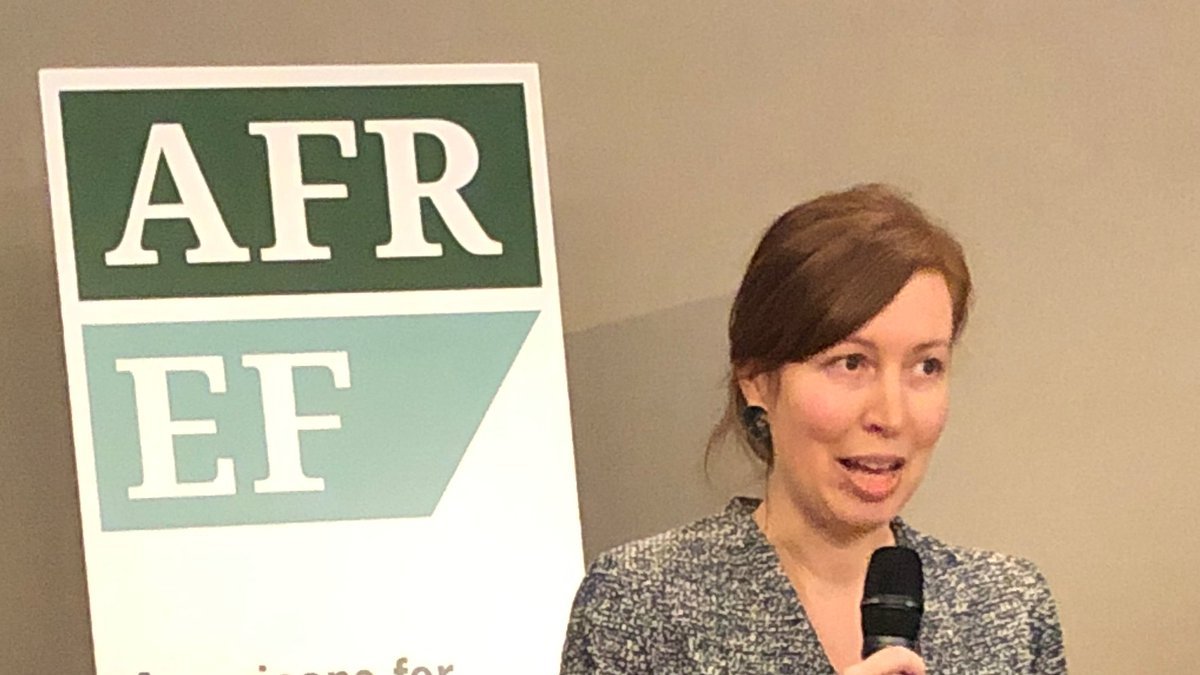
What happens when someone born into a highly prominent political family chooses a professional path that looks very different from her parent’s? Porter McConnell has attracted attention not simply because she is the daughter of longtime U.S. Senator Mitch McConnell, but because of the policy and advocacy career she has built in her own right. Her work has focused on financial reform, economic inequality, development policy, government accountability, and efforts to make financial institutions more responsive to ordinary people. Over the course of her career, she has worked with advocacy organizations, international development groups, and public-interest coalitions. This article looks at Porter McConnell’s background, education, professional journey, advocacy work, and the qualities that make her career distinctive today.
Porter McConnell Biography at a Glance
| Category | Details |
|---|---|
| Full name | Porter McConnell |
| Known for | Policy advocacy and financial reform |
| Professional field | Public policy, advocacy, and nonprofit campaigns |
| Notable role | Senior Director/Campaign Director associated with Take on Wall Street |
| Organization | Americans for Financial Reform |
| Earlier focus | Development, foreign aid, financial transparency, and international advocacy |
| International experience | Work connected to Colombia, Costa Rica, and global development |
| Education | Williams College and University of Michigan are widely reported in biographical sources |
| Public profile | Policy advocate rather than elected politician |
Featured Snippet Answer
Porter McConnell is an American policy advocate known for her work on financial reform, economic inequality, development, and government accountability. She has held leadership roles in advocacy campaigns, including Take on Wall Street, and previously worked on international development and financial transparency. Her career stands out for combining policy expertise with coalition-based public advocacy.
Who Is Porter McConnell?
Porter McConnell is a public-policy advocate whose professional career has largely developed outside elected office. She is also known publicly as one of the daughters of Mitch McConnell, the longtime Republican senator from Kentucky. However, her own professional work has centered on advocacy issues that are distinct from her father’s political career.
That contrast is one reason searches for Porter McConnell often begin with her family background but quickly move toward her professional activities.
According to Americans for Financial Reform’s staff biography, McConnell has worked on issues involving financial reform, foreign aid, domestic resource mobilization, and financial transparency. Her career has included positions with organizations such as Oxfam America and the ONE Campaign, as well as international nonprofit work.
Rather than building a career around holding public office, McConnell has worked through organizations and coalitions that seek to influence public policy. This approach is important because many major policy changes involve researchers, organizers, campaigners, nonprofits, and advocacy groups working alongside or outside government.
Her career therefore provides an interesting example of how policy influence can happen without becoming an elected politician.

Porter McConnell’s Educational and Professional Background
Education as a Foundation for Policy Work
McConnell’s reported academic background helped prepare her for a career involving public policy and advocacy. Biographical accounts commonly identify Williams College as part of her educational journey, followed by graduate study in public policy at the University of Michigan.
A public-policy education can be especially useful for someone working across economic, political, and social issues because it combines analytical thinking with an understanding of how government decisions affect communities.
More importantly, McConnell’s later career suggests that her education was not treated as an endpoint. She moved into practical advocacy work involving organizations, campaigns, research, and policy debates.
Early Work in Government and Nonprofits
Before becoming widely associated with financial reform, McConnell gained experience across several areas.
Americans for Financial Reform’s archived staff biography says she worked as a legislative aide for a Massachusetts state senator and later served as a program analyst for a foundation supporting education and climate-related work. It also notes that she spent time in Bogotá, Colombia, where she helped create a network of Latin American NGOs involved in social-enterprise activities.
This early experience is significant because it shows that her career was broader than financial regulation alone.
Her work developed across several connected areas:
- Legislative policy
- International development
- Foreign aid
- Civil society
- Financial transparency
- Economic policy
- Public-interest advocacy
That combination became an important foundation for her later work.
How Porter McConnell’s Career Developed
From International Development to Financial Transparency
One of the most distinctive elements of McConnell’s career is the transition from international development work toward financial transparency and domestic financial reform.
According to Devex, she worked as an advocate for organizations including Oxfam America and the ONE Campaign, with interests including U.S. foreign-aid effectiveness, global health, and the G20.
Americans for Financial Reform also identifies her as having previously run the Financial Transparency Coalition, a global civil-society network focused on illicit financial flows from developing countries.
These experiences help explain why financial policy became such a prominent part of her professional identity.
Financial transparency is not simply about banks. It can involve taxation, international money flows, government accountability, corporate structures, and the ability of governments to collect resources for public services.
Leadership at Take on Wall Street
McConnell became particularly recognizable through her work with Take on Wall Street, a campaign focused on financial-system reform.
Americans for Financial Reform has described her as the campaign’s director, while older materials identify her as campaign manager.
Her work there has involved publicly advocating for policies addressing issues such as:
- Financial-sector accountability
- Corporate taxation
- Consumer protection
- Lending discrimination
- Economic inequality
- Wall Street influence
- Access to financial services
Her role illustrates an important difference between traditional political careers and advocacy careers. Instead of seeking votes for herself, an advocacy campaign attempts to organize public support, influence policymakers, communicate research, and build coalitions around specific policy goals.
What Makes Porter McConnell’s Career Stand Out?
1. She Built a Career Separate From Elected Politics
Perhaps the most obvious distinction is that McConnell has not followed the conventional path into elected office.
Her father became one of the most influential Republican figures in the U.S. Senate, while her own career developed largely through nonprofit organizations and progressive policy advocacy.
That difference has naturally attracted public interest. Yet looking only at the family connection misses the more important part of her professional story: she developed expertise in areas that require substantial knowledge of economics, policy, advocacy, and coalition-building.
2. Her Work Crosses National and International Issues
McConnell’s career has not been confined to one policy area.
Her background includes international development and financial transparency, while her later work has focused heavily on the U.S. financial system.
This gives her professional experience across different levels of policymaking.
International development → financial transparency → domestic financial reform is a useful way to understand the broader direction of her career.
3. She Uses Coalition-Based Advocacy
Modern policy campaigns rarely succeed because of one person alone. They depend on partnerships among researchers, nonprofit organizations, labor groups, community organizations, consumer advocates, and other stakeholders.
Take on Wall Street is structured around this type of coalition approach.
A 2023 report connected to Take on Wall Street and Americans for Financial Reform described the coalition’s goal as building a financial system that serves working families rather than concentrating benefits among major Wall Street institutions. McConnell was among those involved in the research and editorial support for that report.
This demonstrates another strength of her career: working through networks rather than relying solely on personal visibility.
Porter McConnell and Financial Reform
Financial reform can sound abstract, but McConnell’s advocacy work has repeatedly connected financial policy to everyday economic concerns.
For example, she has spoken about issues involving taxation, banking access, lending discrimination, stock buybacks, and financial regulation.
In a 2023 Americans for Financial Reform statement concerning President Biden’s budget, McConnell argued in favor of closing the carried-interest loophole and strengthening IRS resources to address tax avoidance.
Her earlier public advocacy also addressed lending discrimination. In 2018, Take on Wall Street released polling showing strong support across political groups for holding financial companies accountable for discriminatory lending practices. McConnell emphasized the economic consequences of discriminatory financial practices.
These examples reveal a consistent theme in her career: financial rules are not merely technical matters; they can affect housing, employment, taxation, debt, and access to basic economic opportunities.
A Case Study: Her Work on Banking Access
One useful example of McConnell’s approach is her involvement in discussions surrounding postal banking and access to financial services.
In 2023, Americans for Financial Reform published material supporting expanded financial services through the U.S. Postal Service, pointing to the needs of households that are unbanked or underbanked. McConnell contributed to the discussion by focusing on how financial-system design can affect people with fewer economic resources.
This is significant because it shows how her advocacy connects large policy questions with practical consumer experiences.
Instead of treating banking access purely as a question for financial institutions, this approach asks broader questions:
- Who can easily access a bank account?
- Who faces expensive fees?
- How do financial rules affect low-income households?
- What role can public institutions play?
- How can financial services become more accessible?
These questions reflect the broader policy philosophy that has appeared throughout McConnell’s public work.
Her Public Profile and Family Connection
Porter McConnell’s family background inevitably plays a role in public interest surrounding her.
She is one of Mitch McConnell’s three daughters from his first marriage to Sherrill Redmon. Public biographical records identify her alongside her sisters Elly and Claire.
However, her professional identity is considerably more specific than simply being a politician’s daughter.
Her career has developed through nonprofit advocacy, international development, policy campaigns, and financial reform. In that sense, the family connection provides context, but it does not fully explain her professional accomplishments.
The contrast between her policy advocacy and her father’s political career is also a reason she has received media attention. Her professional positions have frequently placed her on policy issues that differ sharply from the Republican politics associated with her father.
Pros and Cons of Her Career Path
Pros
- Strong policy experience: Her work covers multiple complex policy areas.
- International perspective: Experience with development and financial transparency adds a global dimension.
- Coalition-building: Her career demonstrates experience working with advocacy networks.
- Public communication: She has contributed to reports, statements, interviews, and policy commentary.
- Issue specialization: Financial reform provides a clear area of professional expertise.
Cons or Challenges
- Family overshadowing: Public attention can focus heavily on her relationship to Mitch McConnell.
- Partisan controversy: Financial reform and economic policy are politically sensitive subjects.
- Limited mainstream visibility: Advocacy professionals often have less public recognition than elected officials.
- Policy complexity: The issues she works on can be difficult for general audiences to understand.
- Public scrutiny: Working on controversial financial issues inevitably attracts criticism from opposing interests.
Expert Takeaways: What We Can Learn From Her Career
McConnell’s professional path offers several useful lessons for people interested in policy and advocacy careers.
Build Expertise Before Seeking Visibility
Her career illustrates the value of developing knowledge across related subjects rather than relying entirely on public recognition.
Learn to Work Across Organizations
Policy change is usually collaborative. Experience with nonprofits, campaigns, researchers, and advocacy groups can create skills that are difficult to gain from a single job.
Connect Policy to Real-World Problems
McConnell’s public work frequently translates technical issues such as tax policy and financial regulation into questions involving workers, consumers, families, and communities.
Develop Both Research and Communication Skills
Effective advocacy requires more than knowing the facts. Professionals must explain those facts clearly, persuade audiences, work with coalitions, and communicate with policymakers.
Why Porter McConnell’s Career Remains Interesting Today
The continuing interest in Porter McConnell is partly explained by her family connection, but her professional record offers a more substantive reason to examine her career.
She represents a type of policy professional who works behind the scenes rather than seeking elected office. Her career has moved through international development, financial transparency, nonprofit advocacy, and financial reform, giving her a broad perspective on how economic systems affect society.
Her work with Take on Wall Street has also placed her in highly visible debates over taxation, banking, corporate power, consumer protection, and inequality. Americans for Financial Reform continues to identify her with leadership in its Take on Wall Street work.
For anyone researching Porter McConnell, the key takeaway is that her public identity cannot be reduced to her family. Her career is better understood through the policy issues she has worked on and the organizations and coalitions she has helped lead.
Also Read: Harvey Kirby Ross: Untold Facts About His Life and Work
Conclusion
Porter McConnell’s career stands out because it combines public-policy knowledge, international development experience, financial transparency work, and advocacy leadership. Although her family background has made her a recognizable name, her professional path has been shaped by policy campaigns rather than elected office.
From her early work in legislative and nonprofit settings to her involvement with financial transparency and Take on Wall Street, McConnell has consistently focused on questions surrounding economic fairness, accountability, and the role of financial institutions.
For readers searching for Porter McConnell, the most useful perspective is therefore not simply to ask who her famous parent is. It is to examine what she has done professionally—and how her work has contributed to some of the most important debates surrounding finance and economic policy.
FAQs About Porter McConnell
Who is Porter McConnell?
Porter McConnell is an American policy advocate known for her work in financial reform, development, financial transparency, and economic policy. She has held leadership positions with advocacy campaigns, most notably Take on Wall Street, and has also worked with international development and nonprofit organizations.
What is Porter McConnell known for?
She is best known professionally for her work with Take on Wall Street and Americans for Financial Reform. Her advocacy has addressed financial regulation, taxation, banking access, consumer protection, economic inequality, and the influence of large financial institutions on public policy.
Is Porter McConnell a politician?
No. Porter McConnell is primarily known as a policy advocate and nonprofit campaign leader rather than an elected politician. Her career has involved influencing policy through advocacy organizations, research, public communication, and coalition-building rather than holding elected office.
Is Porter McConnell related to Mitch McConnell?
Yes. Porter McConnell is one of Mitch McConnell’s three daughters from his first marriage to Sherrill Redmon. Her family connection has generated significant public interest, but her own career has developed largely through nonprofit advocacy and policy work.
What organizations has Porter McConnell worked with?
Her professional background includes work with organizations such as Oxfam America and the ONE Campaign, as well as the Financial Transparency Coalition and Americans for Financial Reform. Her experience has covered international development, financial transparency, and domestic financial reform.
What makes Porter McConnell’s career distinctive?
Her career is distinctive because it combines international development experience with domestic financial-policy advocacy. She has worked on complex issues while also communicating their effects on ordinary consumers and communities, making coalition-building and public-interest advocacy central parts of her professional path.