Casino registration promotions can differ in eligibility criteria, wagering requirements, and withdrawal limits. Explore this UK no-deposit casino bonus guide to understand common offer conditions and the importance of checking operator licensing before registering.

Free spins promotions may come with restrictions on eligible games, winnings, and withdrawal conditions. Learn more about no-deposit free spins at casinos not on GamStop and review the legal considerations, consumer protections, and risks associated with offshore gambling platforms.

No-deposit free spins can provide access to selected slot games without an initial deposit, subject to specific promotional terms. Discover the latest considerations for UK no-deposit free spins offers, including eligibility rules, wagering conditions, and restrictions on withdrawing winnings.

Promotions advertised without wagering requirements may still include other limitations that affect eligibility and withdrawals. This overview of UK casinos offering no-wagering, no-deposit free spins explains which terms to examine before accepting a promotional offer.

Offshore casinos may have different licensing arrangements and consumer protection standards from UK-licensed operators. Read this guide to no-deposit free spins at casinos not on GamStop to understand promotional conditions, verification requirements, and the risks of gambling outside UK regulatory safeguards.

Comparing free spins offers requires attention to more than the advertised number of spins. Explore UK no-deposit free spins offers and wagering guides to learn about eligibility, game restrictions, withdrawal limits, and the importance of choosing appropriately licensed operators.

Casino promotions can offer different quantities of free spins, with conditions varying between operators and individual campaigns. This guide to 20, 25, 50, 100, and 200 no-deposit free spins in the UK explains how to compare promotional terms, eligible games, and potential withdrawal restrictions.

Bitcoin and other cryptocurrencies are accepted by some online gambling platforms, but payment policies and legal protections can vary. Discover the key considerations when researching the best crypto casinos for UK players, including digital currency transactions, operator licensing, and applicable gambling regulations.

Withdrawal policies are an important factor when comparing real-money online casinos. Explore the best real-money online casinos in the UK with fast withdrawals to understand payment processing, identity verification, and the conditions that can affect payout times.

Identity verification helps gambling operators meet regulatory and anti-money-laundering obligations, although requirements can vary by jurisdiction. This guide to no-KYC casinos for UK players explores verification practices, privacy considerations, and the legal and consumer protection risks associated with operators outside the UK regulatory framework.

Offers advertised as having no wagering requirements still need to be assessed against their full terms and conditions. Read this guide to no-wagering, no-deposit casino free spins in the UK to understand promotional restrictions, withdrawal eligibility, and common conditions that may apply.

Free spins promotions vary in their potential value, eligibility criteria, and rules for accessing winnings. Explore UK no-deposit free spins with no-wagering offers to learn how to assess bonus terms, game restrictions, and withdrawal conditions before participating.

Paysafecard is a prepaid payment method that can help users manage their online spending. Discover the best licensed Paysafecard casinos in the UK and compare deposit options, payment conditions, and operator credentials before choosing a platform.

Licensing, game selection, payment methods, and withdrawal policies are essential factors when evaluating online gambling platforms. This comparison of the best licensed real-money online casinos in the UK highlights key criteria for assessing operators and understanding their terms and consumer protections.

Skrill is a digital wallet that may be available for deposits and withdrawals at participating online casinos. Explore the best Skrill casinos in the UK to compare payment availability, transaction procedures, verification requirements, and the conditions that apply to account withdrawals.

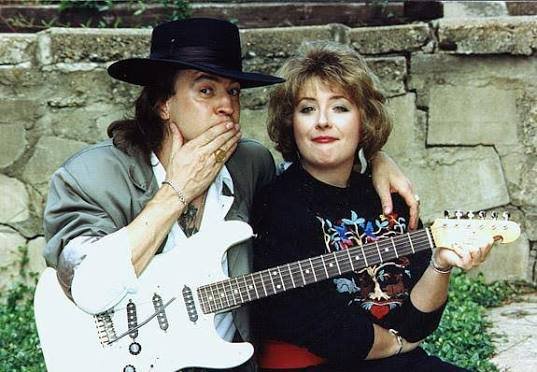
Lenora Darlene Bailey: What You Should Know About Her

Who was Lenora Darlene Bailey, and why does her name continue to appear in discussions about legendary blues guitarist Stevie Ray Vaughan? Although she was not a musician or mainstream celebrity herself, Bailey became connected to music history through her relationship with Vaughan during the years when his career was developing.

Known to many as “Lenny,” Lenora Darlene Bailey was Stevie Ray Vaughan’s wife during a significant period of his personal and professional life. Their marriage began in 1979 and lasted roughly six and a half years, according to biographical accounts of Vaughan.

This article explores what is publicly known about Bailey, including her early life, marriage, connection to Vaughan’s famous “Lenny” guitar and song, later years, and the facts that remain difficult to verify.

Lenora Darlene Bailey Biography at a Glance

CategoryDetails
Full nameLenora Darlene Bailey
Also known asLenora “Lenny” Vaughan
Date of birthDecember 4, 1953
BirthplaceBakersfield, California, United States
Known forMarriage to Stevie Ray Vaughan
MarriageStevie Ray Vaughan
Marriage year1979
Divorce1980s
Date of deathJuly 27, 2018
Age at death64
Later residenceIsla Mujeres, Mexico
Public profilePrimarily known through her connection to Vaughan

An obituary published by the Austin Chronicle identifies Lenora Darlene Vaughan, also known as Lenny, as having been born on December 4, 1953, and having died on July 27, 2018. The obituary was written from the perspective of her daughter and provides a rare personal glimpse into her later life.

Featured Snippet Answer

Lenora Darlene Bailey, also known as Lenny Vaughan, was the former wife of legendary blues guitarist Stevie Ray Vaughan. They married in 1979 and later divorced. Bailey remained largely outside the entertainment spotlight, although she became part of Vaughan’s story through their relationship and the Fender Stratocaster he named “Lenny” after her.

Who Was Lenora Darlene Bailey?

Lenora Darlene Bailey was a private American woman whose public recognition largely comes from her marriage to Stevie Ray Vaughan, one of the most influential blues guitarists of the modern era.

Unlike Vaughan, Bailey did not build a public career as a recording artist. Consequently, reliable information about her life is considerably more limited than information about her famous former husband.

Her connection to Stevie Ray Vaughan

Biographical accounts state that Vaughan met Bailey in Austin in 1978, when his career was still developing. She became known by the nickname “Lenny,” a name that would later become closely associated with one of Vaughan’s guitars and an instrumental composition.

This relationship placed Bailey near an important stage of Vaughan’s career. He was becoming increasingly recognized in the Austin blues scene, eventually moving toward national and international success with Double Trouble.

That distinction is important: Bailey’s historical significance comes primarily from her personal connection to Vaughan rather than from a separate entertainment career of her own.

Early Life and Family Background

Public information about Lenora Darlene Bailey’s childhood and education is limited. Several online biographies identify her birthplace as Bakersfield, California, and give December 4, 1953, as her birth date. The obituary published by the Austin Chronicle supports the December 4, 1953 birth date.

Some secondary websites provide extensive claims about her parents, siblings, education and professional activities. However, these details are not equally supported by strong primary documentation.

Why her early life is difficult to document

Bailey was not a celebrity during her lifetime in the conventional sense. She did not maintain the kind of public career that produces extensive newspaper archives, interviews and professional biographies.

Therefore, readers should be careful with websites that present highly specific personal details without identifying their original sources.

The most defensible approach is to distinguish between:

  • Documented biographical information
  • Details repeated by multiple secondary websites
  • Unverified claims that should not be presented as established fact

This distinction is especially important when researching people who lived outside the public eye.

Lenora Darlene Bailey and Stevie Ray Vaughan

One of the most important chapters in Bailey’s life was her marriage to Stevie Ray Vaughan.

Vaughan met Bailey in Austin while he was working toward establishing himself as a professional musician. His career would eventually transform the blues-rock landscape, but at the time he was still performing primarily in the Austin music scene.

The couple married in 1979. Their marriage lasted approximately six and a half years. Vaughan’s biography later connected the breakdown of their relationship with the intense personal difficulties surrounding his rise to fame, including struggles with alcohol and drug addiction.

A marriage during a major career transition

The timing of their relationship is significant.

During these years, Vaughan moved from being a respected Texas musician toward becoming an internationally recognized blues guitarist. His career included:

  1. Building Double Trouble’s reputation.
  2. Recording successful albums.
  3. Performing extensively.
  4. Gaining recognition from the wider music industry.
  5. Eventually becoming one of the defining guitarists of the 1980s blues revival.

Bailey’s marriage to Vaughan therefore coincided with one of the most transformative periods of his life.

The Story Behind Vaughan’s “Lenny” Guitar

Perhaps the most fascinating connection between Lenora Darlene Bailey and Stevie Ray Vaughan’s musical legacy involves a guitar.

In 1980, Vaughan became interested in a Fender Stratocaster that he found at a pawn shop. According to accounts of the instrument’s history, he could not initially afford it. Bailey and several of Vaughan’s friends helped purchase the guitar as a birthday gift for him.

Vaughan subsequently named the guitar “Lenny” after Lenora.

Why the guitar matters

The instrument became one of Vaughan’s recognizable guitars and was associated with the instrumental piece “Lenny.”

The story is especially meaningful because the guitar was not simply another piece of equipment. Its name reflected Vaughan’s personal relationship with Bailey.

According to accounts of the guitar’s history:

  • Bailey helped Vaughan obtain the instrument.
  • Vaughan named the guitar “Lenny.”
  • He later wrote the instrumental “Lenny.”
  • The guitar became an important part of his equipment history.

The original “Lenny” Stratocaster eventually became highly valuable. It was sold at auction in 2004 for $623,500, with proceeds benefiting Eric Clapton’s Crossroads Centre.

That auction helped preserve the connection between Bailey’s name and one of the most recognizable instruments associated with Vaughan.

What Happened to Their Marriage?

The marriage eventually ended during a difficult period in Vaughan’s life.

By the mid-1980s, Vaughan was dealing with serious substance-abuse problems while also facing the pressures of touring and international fame. His personal struggles affected his marriage, and their relationship eventually came to an end.

Divorce and a new chapter

Their divorce was finalized in the late 1980s. Vaughan’s professional life continued to change dramatically afterward.

Following rehabilitation, he returned to music with a renewed focus. His album In Step, released in 1989, became one of his most successful records.

It is important not to reduce Bailey’s story to the breakdown of her marriage. She had a life beyond her relationship with Vaughan, and the available evidence suggests that she eventually pursued a much more private existence away from the music industry.

Lenora Darlene Bailey’s Life After Stevie Ray Vaughan

Information about Bailey’s post-divorce life is considerably scarcer than information about her marriage.

The strongest publicly accessible source is her obituary in the Austin Chronicle. It describes her later home on a small fishing island in Mexico and offers a personal portrait of someone who appreciated art, color, cultural objects and an unconventional lifestyle.

A quieter life away from fame

The obituary’s description is notable because it presents Bailey as more than “Stevie Ray Vaughan’s ex-wife.”

Her home reportedly contained colorful artwork, textiles, sculptures and murals. These details suggest a woman with strong artistic interests and an individual personality.

This later period is significant because it shows how different her life was from the celebrity world associated with Vaughan.

Rather than pursuing publicity, Bailey appears to have maintained a relatively private existence.

When Did Lenora Darlene Bailey Die?

According to her published obituary, Lenora Darlene Vaughan died on July 27, 2018, at the age of 64.

The obituary states that she died at her home on a small fishing island in Mexico.

This source is particularly valuable because it provides information directly framed as a family remembrance rather than simply repeating a celebrity biography.

Why her death is sometimes reported incorrectly

Online biographies occasionally contain conflicting information about Bailey’s later life, including claims about her location, occupation and family.

For that reason, readers should give greater weight to the published obituary and clearly sourced biographical records than to unsourced celebrity websites.

Was Lenora Darlene Bailey a Musician?

No reliable evidence indicates that Lenora Darlene Bailey had a professional career as a recording artist or performing musician.

Her importance to music history comes primarily through her relationship with Stevie Ray Vaughan.

Nevertheless, calling her simply “Vaughan’s ex-wife” overlooks an important part of her story. Her name became permanently connected to one of Vaughan’s famous guitars and his instrumental “Lenny.”

That connection gives her a unique place in the personal history surrounding Vaughan’s music.

Key Facts About Lenora Darlene Bailey

For readers looking for the most important information quickly, these are the key points:

  • She was born on December 4, 1953.
  • She was known as Lenny.
  • She married Stevie Ray Vaughan in 1979.
  • Their marriage lasted approximately six and a half years.
  • Vaughan named a Fender Stratocaster “Lenny” after her.
  • The guitar became associated with Vaughan’s instrumental “Lenny.”
  • The original guitar later sold for $623,500 at auction.
  • She lived privately after her divorce.
  • She died on July 27, 2018.
  • Her obituary describes her later home in Mexico and her distinctive artistic interests.

What Makes Her Story Interesting?

The story of Lenora Darlene Bailey is interesting because it sits at the intersection of private life and music history.

She was not the person standing onstage in front of thousands of fans. Yet her relationship with Vaughan overlapped with the period in which he was becoming a major blues figure.

The “Lenny” guitar provides the clearest tangible connection.

Three reasons her story continues to attract attention

1. Her connection to Stevie Ray Vaughan
Vaughan remains an important figure in blues and rock guitar history, so people naturally become interested in the people closest to him.

2. The famous “Lenny” guitar
The guitar named after Bailey became an important part of Vaughan’s musical identity and was eventually sold for a substantial sum.

3. Her private later life
Unlike many people associated with celebrities, Bailey did not turn her connection to Vaughan into a long public career.

That combination makes her story unusual and memorable.

Pros and Cons of Researching Celebrity-Connected Biographies

When researching someone such as Lenora Darlene Bailey, there are advantages and challenges.

Advantages

  • Multiple biographical sources can reveal different aspects of her life.
  • Music histories provide context for her relationship with Vaughan.
  • Her obituary provides valuable first-person family perspective.
  • The history of the “Lenny” guitar provides a documented connection to Vaughan’s work.

Challenges

  • Her private life was not extensively documented.
  • Online biographies sometimes repeat unsupported claims.
  • Different websites can provide conflicting dates or personal details.
  • Her identity is often reduced to her relationship with a famous musician.

For trustworthy research, it is best to prioritize obituaries, established biographies, historical music sources and documented auction records over unsourced celebrity-profile pages.

Also Read: Loesha Zeviar: What You Should Know About Her Today

Conclusion

Lenora Darlene Bailey remains an intriguing figure because her story is closely connected to Stevie Ray Vaughan while also extending far beyond that relationship. She was part of Vaughan’s life during his transition from an Austin blues musician to an internationally recognized guitar legend.

Her strongest documented connection to Vaughan’s musical legacy may be the “Lenny” Stratocaster, a guitar named after her that later became an important collectible instrument.

At the same time, her later life demonstrates why celebrity-adjacent biographies should be approached carefully. Much of Bailey’s personal history remains private, and some details circulated online are difficult to independently verify.

Ultimately, Lenora Darlene Bailey’s story is not simply about being the former wife of a famous guitarist. It is also about a private individual whose name became unexpectedly woven into the history of one of blues music’s most celebrated musicians.

Frequently Asked Questions

Who was Lenora Darlene Bailey?

Lenora Darlene Bailey, also known as Lenny Vaughan, was the former wife of blues guitarist Stevie Ray Vaughan. She married Vaughan in 1979 and was connected to him during an important stage of his career. She later lived a private life away from the entertainment spotlight.

When did Lenora Darlene Bailey marry Stevie Ray Vaughan?

Lenora Darlene Bailey married Stevie Ray Vaughan in 1979. Their relationship began while Vaughan was developing his career in the Austin music scene. Their marriage lasted approximately six and a half years before ending in divorce.

Why did Stevie Ray Vaughan name his guitar Lenny?

Stevie Ray Vaughan named one of his Fender Stratocasters “Lenny” after Lenora “Lenny” Bailey. Accounts of the guitar’s history say Bailey and Vaughan’s friends helped him obtain the instrument in 1980. Vaughan later wrote the instrumental “Lenny,” further connecting the name with her.

When did Lenora Darlene Bailey die?

According to her published obituary, Lenora Darlene Vaughan died on July 27, 2018, at age 64. The obituary states that she died at her home on a small fishing island in Mexico and provides personal details about her interests and lifestyle.

Was Lenora Darlene Bailey a professional musician?

There is no strong evidence that Bailey had a professional career as a recording or performing musician. She is primarily remembered in music history because of her relationship with Stevie Ray Vaughan and the “Lenny” guitar that he named after her.

What is Lenora Darlene Bailey remembered for?

Lenora Darlene Bailey is remembered mainly for her relationship with Stevie Ray Vaughan, her connection to his famous “Lenny” Stratocaster and her life outside the spotlight. Her obituary also provides evidence of a distinctive personal life that extended well beyond her identity as a famous musician’s former wife.