
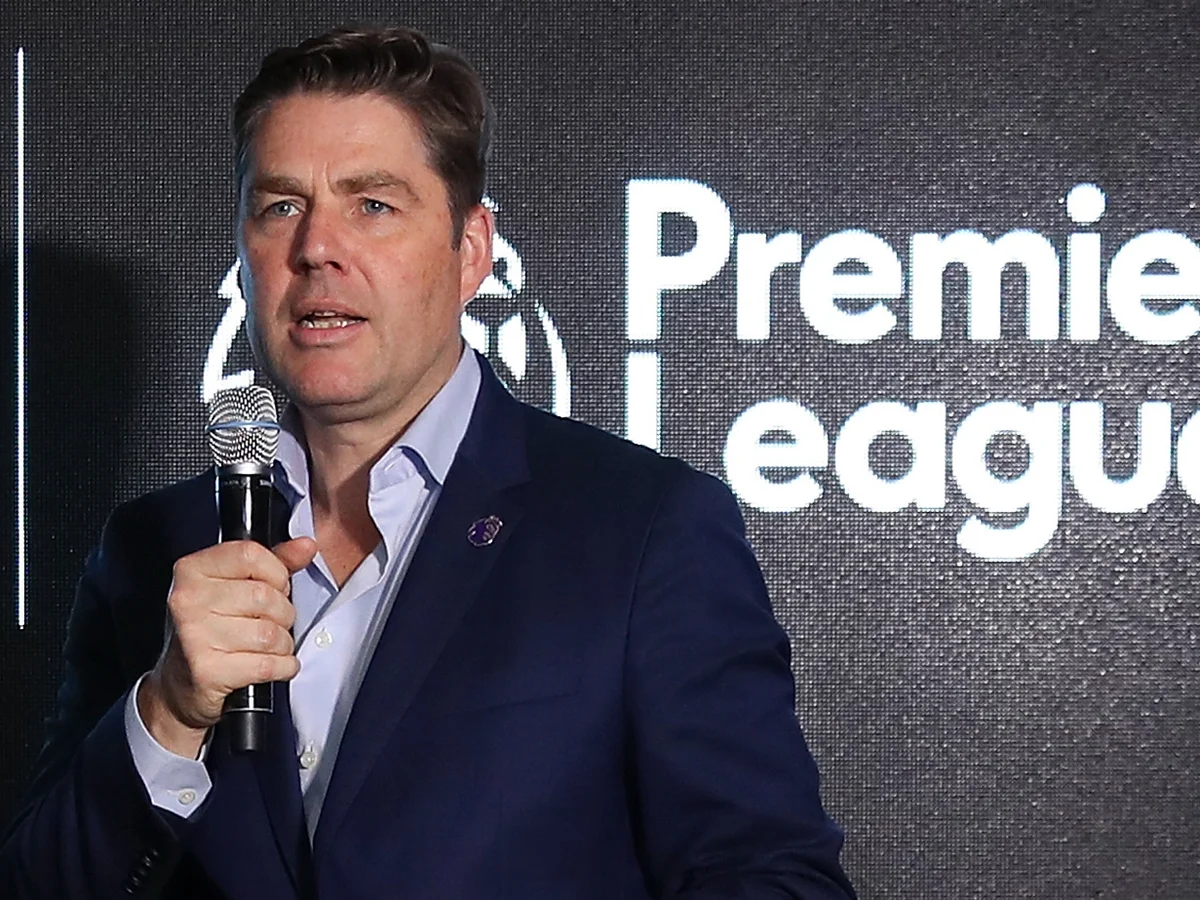
Richard Masters is one of the most influential figures in modern English football, even though he is far less visible than the players and managers who dominate the headlines. As Chief Executive of the Premier League, he operates at the centre of decisions involving clubs, broadcasting, commercial growth, football governance, international expansion, and the future direction of the competition.
But who is Richard Masters, and how did he reach one of the most powerful administrative positions in football?
Masters has spent more than two decades working in the sports industry. He joined the Premier League in 2006, became Managing Director in 2015, served as interim chief executive from 2018, and was formally appointed Chief Executive in December 2019.
This article looks at his career, responsibilities, professional background, influence on the Premier League, and the major issues he continues to face today.
Richard Masters Biography at a Glance
| Category | Details |
|---|---|
| Full name | Richard Masters |
| Profession | Football executive and sports administrator |
| Current role | Chief Executive of the Premier League |
| Premier League joined | 2006 |
| First Premier League role | Director of Sales and Marketing |
| Managing Director | Appointed in 2015 |
| Chief Executive | Appointed in December 2019 |
| Previous experience | EFL, World Sports Group, England and Wales Cricket Board |
| Key responsibilities | Competition operations, business strategy, broadcasting and commercial development |
| Other football role | Chair of the World Leagues Association |
Featured Snippet Answer
Richard Masters is the Chief Executive of the Premier League. He joined the organisation in 2006 as Director of Sales and Marketing, became Managing Director in 2015, and was appointed Chief Executive in December 2019. He oversees the league’s business and competition operations, including strategic growth and media-rights development.
Who Is Richard Masters?
Richard Masters is a senior football administrator responsible for helping run the business and competition structure of the Premier League. Unlike a club chairman or football manager, his role covers the league as a whole rather than one individual team.
The Premier League describes Masters as responsible for all elements of its business and competition operations and for continuing the success of one of the world’s most prominent football competitions.
His responsibilities place him at the intersection of sport and business. Some of the areas connected with his work include:
- League strategy and long-term growth
- Media and broadcasting rights
- Commercial partnerships
- Relationships with member clubs
- Football governance
- International development
- Engagement with stakeholders
- Issues affecting the wider football calendar
This makes Masters an important figure whenever the Premier League faces major structural or commercial questions.
He also chairs the Premier League’s Broadcast and Strategic Advisory Groups. These groups help the league and its clubs consider media-rights strategies and potential growth opportunities.
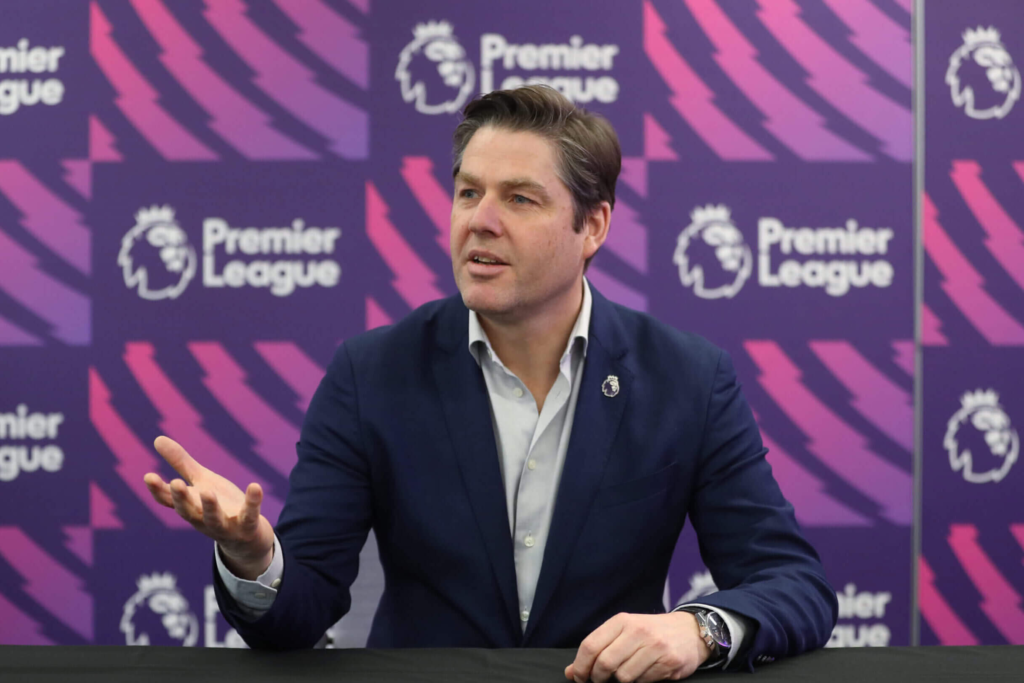
Richard Masters’ Career Background
Early Experience in Sports
Masters did not begin his career as the head of one of the world’s biggest football competitions. His professional journey developed through commercial and administrative positions across the sports industry.
Before joining the Premier League, he worked with organisations including the England and Wales Cricket Board, World Sports Group and the English Football League. He later became Commercial Director of the EFL.
That background is important because the modern Premier League is not simply a sporting competition. It is also a major international entertainment and media business.
Joining the Premier League
Masters joined the Premier League in 2006 as Director of Sales and Marketing. His initial responsibilities therefore had a strong commercial focus.
His career progressed over the following years, and in July 2015 he became Managing Director.
That promotion marked a major expansion in his responsibilities. Instead of concentrating primarily on commercial activity, Masters became involved in a much broader range of league operations.
His long tenure within the organisation also gave him extensive experience working with Premier League clubs, commercial partners and other stakeholders.
How Richard Masters Became Premier League Chief Executive
The path to the chief executive position became clearer in 2018.
After Richard Scudamore’s departure, Masters took on the role of Interim Chief Executive. According to the Premier League, he held the interim position for approximately a year before clubs formally approved his appointment as Chief Executive in December 2019.
His appointment was significant because the clubs had already seen how he handled the responsibilities of the position.
At the time, the Premier League highlighted his ability to deal with clubs, partners and other stakeholders during his interim period.
Why His Background Mattered
Masters brought several useful qualities to the role:
- Long-term Premier League experience
- Commercial and marketing knowledge
- Experience with the EFL
- Understanding of media rights
- Knowledge of relationships between clubs and league officials
- Experience working across different parts of the sports industry
This combination is particularly relevant to a league where financial, commercial and sporting considerations are closely connected.
What Does Richard Masters Do as Premier League CEO?
The title of chief executive can sound straightforward, but Masters’ responsibilities are broad.
The Premier League states that he oversees the organisation’s business and competition operations and is responsible for its continuing success.
In practical terms, his work involves balancing several competing priorities.
Commercial Growth
The Premier League generates enormous global interest, making commercial strategy one of the most important areas of its administration.
Masters has a background in sales, marketing and commercial management, which is directly relevant to this part of his role.
Broadcasting
Broadcasting is fundamental to the Premier League’s international reach. Masters chairs the league’s Broadcast Advisory Group, helping clubs and league officials consider media-rights strategies.
Club Relationships
The Premier League consists of member clubs with different financial circumstances, ambitions and priorities. Maintaining relationships between those clubs is therefore an important part of the chief executive’s job.
Competition Operations
His responsibilities also extend beyond commercial matters. The official Premier League governance information identifies him as overseeing competition operations as well as business activities.
Richard Masters and the Global Growth of the Premier League
The Premier League’s appeal extends far beyond England, and international expansion has become increasingly important.
Masters has been involved in efforts to strengthen the league’s international relationships. In 2025, for example, the Premier League opened an office in Mumbai as part of its strategy to develop closer connections with Indian supporters and partners. Reuters reported that Masters described the move as part of the league’s efforts to connect more closely with its large Indian fan base.
This reflects a broader reality: modern football leagues compete not only for trophies but also for global audiences, broadcast viewers, commercial partnerships and digital attention.
The Premier League’s international strategy therefore forms an important part of the environment in which Masters operates.
Major Challenges Facing Richard Masters
Being Premier League chief executive comes with considerable pressure. The position involves dealing with issues that can affect clubs, players, supporters and football authorities simultaneously.
Football Calendar Congestion
One major issue has been the increasingly crowded football calendar.
In 2024, Masters warned that the number of domestic and international competitions was creating significant pressure. He argued that the expansion of tournaments, including the Club World Cup and changes to UEFA competitions, was pushing the football calendar toward a critical point.
The problem is complicated because different organisations have different interests.
Players want manageable workloads. Clubs want competitive opportunities and revenue. International organisations want to expand their competitions. Domestic leagues want to protect their schedules and commercial value.
Finding a workable balance is therefore one of the industry’s biggest challenges.
Football Regulation
Another major issue has been the creation of an independent regulator for English football.
Masters publicly expressed concerns about the potential consequences of independent regulation, particularly regarding financial redistribution and the possibility of additional bureaucracy.
His position illustrates the difficult role of a league chief executive: he must defend the interests of the organisation while also operating within a wider football system.
Refereeing and Trust
Officiating has also become an increasingly important issue.
In August 2026, Masters joined refereeing chief Howard Webb in expressing concerns about controversies surrounding disciplinary decisions and the potential effect on public confidence in football officiating. Reuters reported that Masters stressed the importance of maintaining integrity and transparency in the sport.
This demonstrates how the chief executive’s role can extend into broader issues of confidence in the competition, even when he is not directly responsible for refereeing decisions.
Richard Masters’ Role in Football Governance
Football governance is one of the most complicated areas of Masters’ work.
The Premier League operates through its clubs and governing structures, meaning major decisions can involve multiple stakeholders.
According to the league’s governance information, Masters is a Premier League Director as well as Chief Executive. He also serves as Chair of the World Leagues Association, is involved with the Premier League Charitable Fund and is a Trustee of the Football Foundation.
These positions demonstrate that his influence is not limited to the day-to-day administration of Premier League matches.
His work connects:
- Domestic football
- International leagues
- Commercial interests
- Broadcasting
- Club governance
- Community initiatives
- Football policy
That combination makes the position particularly demanding.
What Makes Richard Masters’ Career Interesting?
There are several reasons football followers continue to search for information about Richard Masters.
1. He Rose Through the Organisation
Masters did not arrive at the Premier League chief executive position without extensive experience. He spent many years inside the organisation, moving from Director of Sales and Marketing to Managing Director and eventually Chief Executive.
2. He Combines Sport and Business
His career reflects how professional football has changed. Modern league leadership requires knowledge of commercial strategy, media, governance and international markets alongside an understanding of the sport itself.
3. His Decisions Affect the Entire League
A football manager may influence one club, while Masters works at a level where decisions can affect the entire Premier League structure.
4. He Operates in a Highly Competitive Environment
The Premier League faces pressure from domestic football organisations, European competitions, international governing bodies, broadcasters, players, clubs and supporters.
That makes leadership particularly challenging.
Richard Masters: Career Strengths and Challenges
| Strengths | Challenges |
|---|---|
| Extensive Premier League experience | Managing competing club interests |
| Strong commercial background | Football calendar congestion |
| Experience across sports organisations | Regulatory pressure |
| Knowledge of broadcasting | Maintaining fan confidence |
| International football experience | Balancing commercial and sporting priorities |
| Long-term industry relationships | Growing global demands |
This comparison helps explain why Masters’ career is more complex than simply holding the title of Premier League CEO.
Expert Take: What to Watch in Richard Masters’ Career
For anyone following Richard Masters today, several areas are particularly worth watching.
Media and Commercial Strategy
The Premier League’s global popularity means broadcasting and commercial rights will remain central to its future.
International Expansion
The league continues to build relationships with supporters and partners around the world. International offices and regional initiatives are likely to remain important.
Regulation
The relationship between the Premier League, government and football regulators will continue to attract attention.
Player Workload
As international and domestic competitions expand, the debate surrounding player welfare and fixture congestion is unlikely to disappear.
Football Integrity
Transparency around refereeing, disciplinary processes and governance will remain important to maintaining trust in the competition.
For readers trying to understand Masters’ importance, these issues provide a better picture than focusing only on his job title.
Richard Masters’ Career Today
As of 2026, Richard Masters remains the Chief Executive of the Premier League, according to the league’s current governance information.
His position continues to place him at the centre of some of the biggest discussions in professional football.
Recent comments and activities show that his role involves more than commercial growth. He has been involved in debates about international football governance, refereeing, player workloads and the future structure of the sport.
That makes his career particularly relevant to anyone interested in how football operates away from the pitch.
Also Read: Gaia Wise: What Makes Her Life and Career So Intriguing?
Conclusion
Richard Masters has built his career through the business and administrative side of professional sport, eventually reaching one of the most influential positions in world football. From joining the Premier League in 2006 to becoming Managing Director and then Chief Executive, his career has developed alongside the league’s extraordinary global growth.
Today, his responsibilities extend across competition operations, commercial strategy, broadcasting, governance and international development. At the same time, he faces difficult questions about regulation, fixture congestion, football integrity and the changing structure of the global game.
Understanding Richard Masters therefore means looking beyond the title of Premier League CEO. His career offers an insight into how modern football is managed—and why decisions made away from the pitch can be just as important as what happens on it.
Frequently Asked Questions About Richard Masters
Who is Richard Masters?
Richard Masters is the Chief Executive of the Premier League. He joined the organisation in 2006 as Director of Sales and Marketing, became Managing Director in 2015 and was formally appointed Chief Executive in December 2019. He oversees the league’s business and competition operations.
When did Richard Masters become Premier League CEO?
Richard Masters became Premier League Chief Executive in December 2019. Before his permanent appointment, he had served as interim chief executive for approximately a year. Premier League clubs approved his appointment after his interim period.
What did Richard Masters do before the Premier League?
Before joining the Premier League, Masters worked in the sports industry, including roles with the England and Wales Cricket Board, World Sports Group and the English Football League. He was Commercial Director of the EFL before joining the Premier League in 2006.
What is Richard Masters responsible for?
Masters oversees the Premier League’s business and competition operations. His responsibilities include strategic development, relationships with clubs and stakeholders, broadcasting strategy and commercial growth. He also chairs the league’s Broadcast and Strategic Advisory Groups.
Is Richard Masters still Premier League CEO in 2026?
Yes. The Premier League’s current governance information identifies Richard Masters as its Chief Executive and Director. His responsibilities continue to cover the league’s business and competition operations.
What are Richard Masters’ biggest challenges?
Among the major issues associated with his role are football calendar congestion, regulation of English football, international football governance, broadcasting, commercial growth and maintaining confidence in football’s officiating and governance systems. Recent statements show his involvement in several of these debates.